Is Google’s AI Calling Your Business? Here’s What We Found and Why This Is A Call You Don’t Want To Miss.
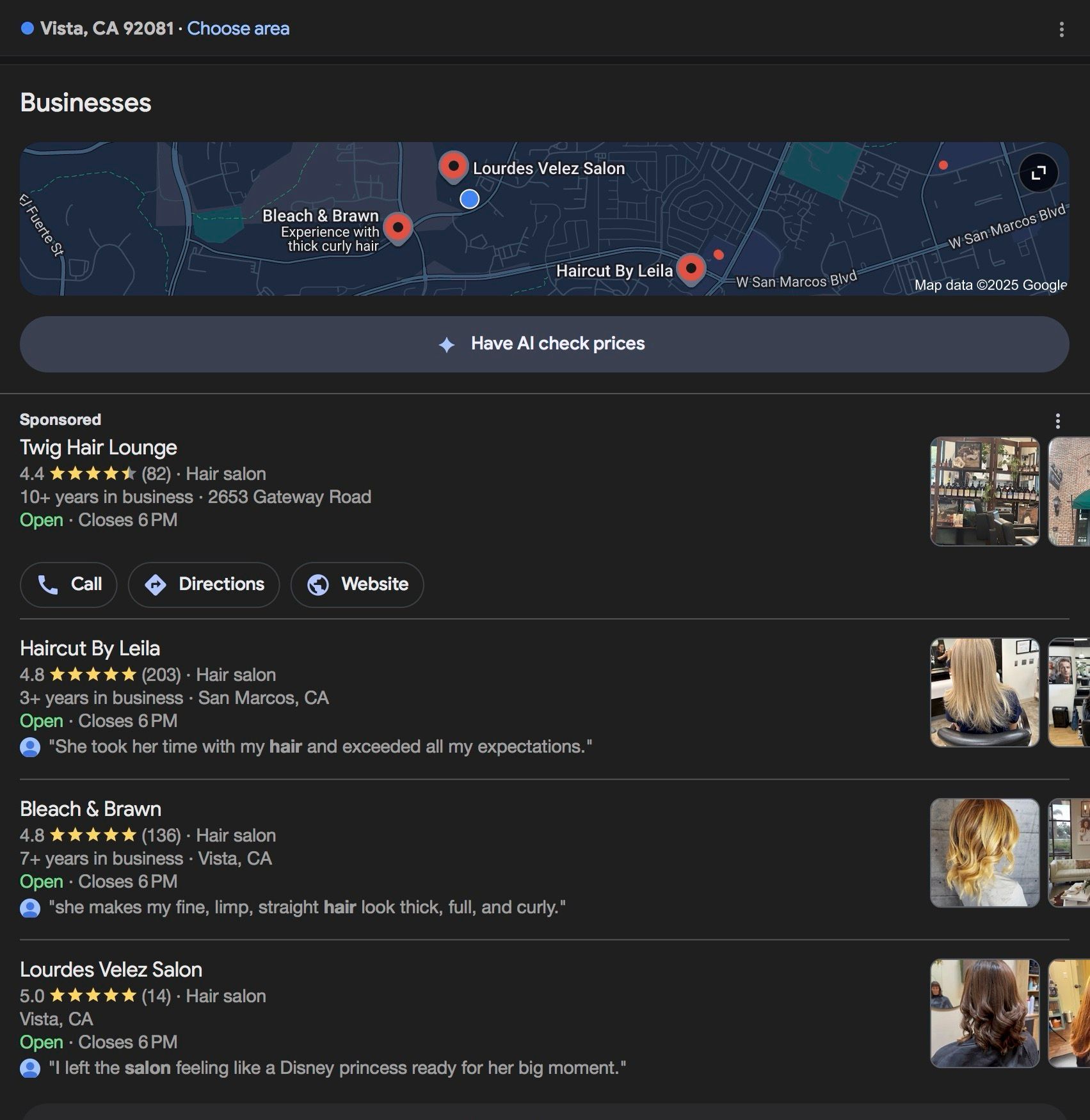
This week, while helping a Vista nail salon improve their SEO, something unusual caught our attention. In the Google Map Pack, under a listing of local nail salons, a new option appeared:
“Have AI check prices.”
Naturally, we clicked it.
What Triggered Our Test?
After selecting the “Have AI check prices” prompt, Google asked which service we wanted and when we wanted it. Then it asked for an email and phone number.
Within five minutes, we started receiving texts with pricing and availability from salons in the Vista area.
At first, we figured it was just another AI-powered search feature, but the results looked like real human responses. That raised a question:
Was Google’s AI actually calling these businesses to ask for pricing and availability?
We had to know.
Testing It Across Other Industries
We reached out to a few nail salons to confirm, but the owners were just as confused as we were. None had knowingly provided live quotes to Google.
So we expanded our test to other local industries.
When we searched for “auto mechanics near me” from our office in Vista, the “Have AI check prices” feature appeared again… this time asking for the vehicle make, model, and specific auto repair services needed.
Since we work with many auto shops in North County, we were able to
capture a live Google AI phone call to our client, Mission Auto Care.
Listen to the Google AI phone call audio here.
What We Found: Google’s AI is Collecting Live Local Data
Here’s what our team at GoBeRewarded learned after digging deeper:
- The feature has rolled out for select industries only, including nail salons, hair salons, and auto repair shops.
- Google asks for specific services and appointment times, mimicking what a real customer might say.
- It attempts to call the top 5 local businesses listed in the Google Map Pack.
- If no one answers, it tries to pull the information from your Google Business Profile or website.
- In call-tracking tools like CallRail, these calls appear as “Google My Business”, not Gemini or AI.
- Results are texted or emailed to the user within minutes (though some responses failed to come through during testing).
- As of now, these leads are free and organic. They are unconnected to Google Guaranteed, Local Services, or Pay-Per-Click ads.
What San Diego Businesses Should Do About It
Google’s AI is now a customer-facing tool, and it’s collecting your pricing and availability, whether you know it or not. Here's how to make sure your business isn’t left behind.
1. Answer the Phone (Even If It Sounds Like a Robot)
If you ignore unfamiliar numbers, you might be missing free, high-intent leads. Treat any strange but service-specific call like a real customer inquiry.
2. Keep Your Website Updated
Google may scan your website for service descriptions, prices, and availability if you don’t answer the call. Make sure your content is up to date and clear.
3. Optimize Your Google Business Profile
Update your profile with accurate services, hours, and pricing. Google’s AI appears to cross-reference this data when filling in gaps.
Pro tip: Your Google Business Profile is your Off-Page SEO, and your website is your On-Page SEO. Both need to match.
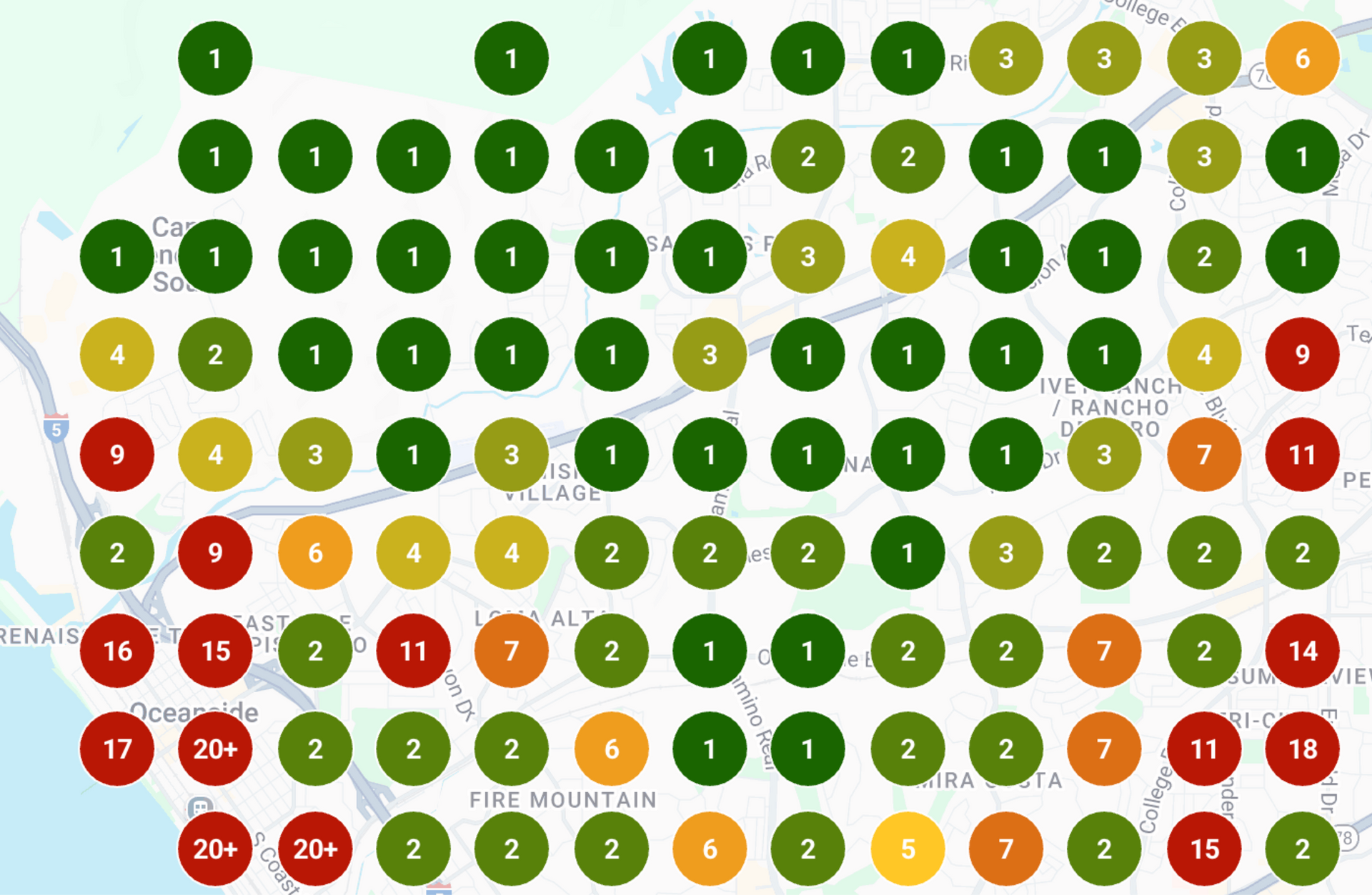
4. Make Sure You're in the Map Pack
This feature targets businesses in the top 5 local results. If you're not showing up, you're not even in the running. If you haven’t recently run a
Map Pack audit, you probably don’t know where your business stands.
Want to Know If You’re Showing Up?
If you want to know whether you're in the top 5 for your industry or location, we can run a free local SEO scan for you.
We’ll show you:
- Where your business ranks
- What your competitors are doing better
- And how to position yourself to receive organic leads from AI tools like this
Google’s AI-assisted search isn’t coming. It’s already here. Local businesses that adapt early will benefit the most. Start with accurate listings, smart SEO, and a strategy to stay ahead of the curve.
Innovative businesses are already getting these calls. Let us help you be one of them.