
WebP images on all our sites for faster loading

February 27, 2020

We are now using WebP images for all site images, which means your site images load more quickly. This change automatically boosts site performance and requires no additional effort at your end. We take care of everything, automatically and behind the scenes.
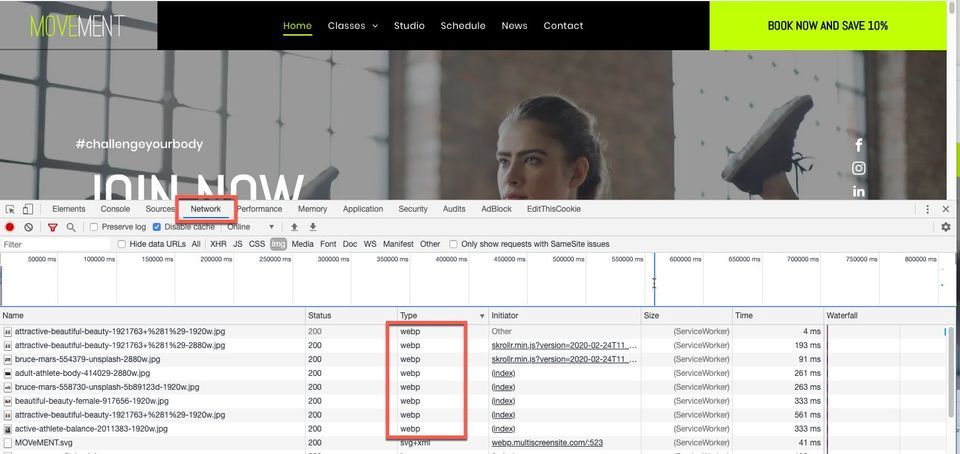
A screenshot of a website that says join now

Why WebP is great for your sites

WebP is an image format developed by Google that provides lossless and lossy compression for images on the web. Using this format, images are smaller and richer than in other formats, which enables them to load more quickly. For example, WebP lossless images are 26% smaller than PNGs and 25-34% smaller than JPEG images. See this article on Google's developer site for more details.


One more way we’re optimizing your images

In addition to converting JPEG and PNG files to WebP, we’re also adjusting the size of images so that they automatically fit their containers. It’s another effort we’re making, behind the scenes, so your sites load quickly and rank well on Lighthouse.


WebP images already in all new sites

In every new site webuild, images will now be in WebP format. For all existing sites, the images will be automatically converted.


Note:

  • The change doesn't affect the image name
  • SVGs and Gifs are not converted to WebP
  • Safari doesn’t support WebP, so when your sites are delivered on this browser, images will be displayed in their original format.

Originally posted at Duda.co

Person viewing a desktop monitor with a spreadsheet or dashboard in an office setting
May 1, 2026
Learn how geo-targeting improves digital ad performance for San Diego businesses by reaching the right local audience and reducing wasted ad spend.
A magnifying glass over a document against a light blue background with icons of a key, paper plane, and the text
March 12, 2026
Search engine optimization, or SEO, is often talked about as one thing, but it actually includes several different types of work. Two of the most important are on-page SEO and off-page SEO . Both influence how your website performs in search results, but they focus on different parts of your online presence. What Is On-Page SEO? On-page SEO refers to everything you optimize directly on your website to help search engines understand your content.  This includes things like: Page titles and meta descriptions Headings and page structure Keyword usage in the content Internal linking between pages Image optimization and site speed The goal of on-page SEO is to make your website clear, organized, and easy for search engines to understand. What Is Off-Page SEO? Off-page SEO refers to signals that happen outside of your website but still influence how search engines evaluate it. The most common example is backlinks , which are links from other websites pointing to yours. When reputable websites link to your business, search engines see that as a sign of credibility. Off-page SEO can include: Backlinks from other websites Business directory listings Local citations Online mentions of your business Why Both Matter A well-optimized website is important, but it is only part of the picture. Search engines also look for signals that your business is trusted and referenced elsewhere online. Strong SEO typically comes from a combination of both a well-structured website and credible external signals.
Two people, woman and man, looking at a computer screen together at a desk.
February 28, 2026
Learn how Google Ads is tightening phone number and business info rules in 2026, and what small businesses must do to stay compliant and maximize ad performance.